
Hyperscale & colo
Live cabinets, containment aisles, and raised floors that punish the wrong tool. Sized for two-tile aisles. Non-marking on tiles.
Applications
General-purpose stackers mark tiles, miss insertion height, and fail a two-tile spin. Four technicians stripping a live rack is the expensive, dangerous method. These two units were specified for live Canadian halls.
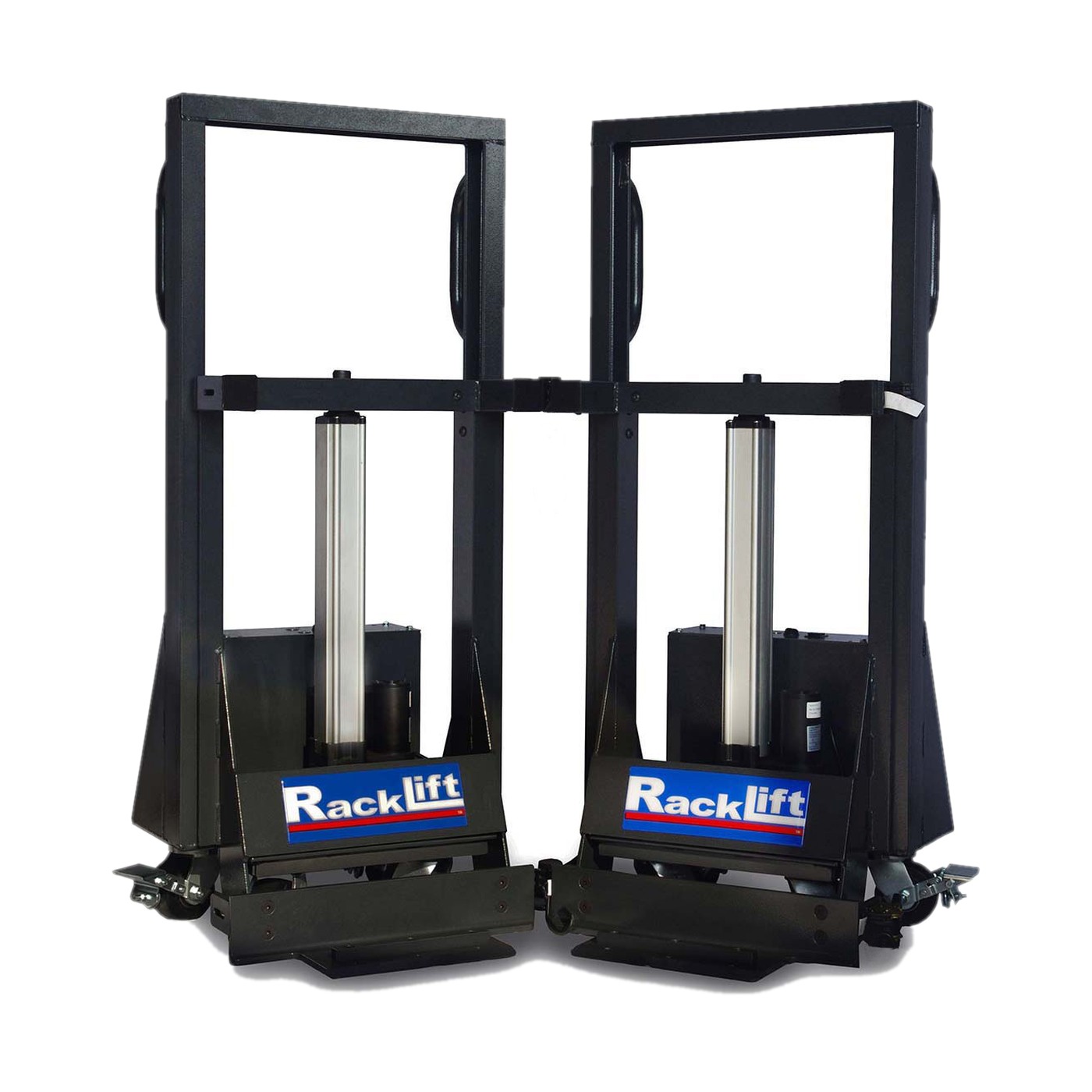
Live cabinets, containment aisles, and raised floors that punish the wrong tool. Sized for two-tile aisles. Non-marking on tiles.
One technician lands a populated rack without a four-person crew. Power supplies stay in the cabinet.
If it sits on a raised floor and weighs thousands of kilograms, we lift it. Manual or battery-electric. 2,268 kg (5,000 lb).
Low doorways. Tight turns. The compact footprint clears a standard door and spins in a two-tile aisle.
Why RackLift
Using people to lift cabinets creates unnecessary risk of injury and equipment damage. A warehouse lift was never designed for a raised floor.
Annual labour
$65,280 CAD
Four-person crew
Annual labour
$6,120 CAD
One technician + RackLift
The difference
$59,160 CAD
Labour avoided
Does not include injury cost, delayed turn-ups, or damaged hardware — the expensive part.
Using people to lift devices and cabinets creates unnecessary risk of injury and equipment damage. One operator. The load stays in the rack.
General-purpose stackers mark tiles, miss insertion height, and cannot spin in a two-tile aisle. These units were specified for live halls.
The old method pulls every server, then four technicians muscle the empty cabinet. An RL3500S or RL5000S relocates it fully loaded.
Ball-screw or auto-lock battery winch. The brake sets when you let go. Non-marking casters spread 2,268 kg (5,000 lb) across the raised floor.
Injury, delayed turn-ups, damaged hardware. One technician and a lift built in Markham and Belleville is the other option.